
|
7/8/2021 7 Comments Doodle Notes Demystified: Jump Right In and Start with Your Very Next Lesson PlanA Step-By-Step Simplified Daily Guide Getting Started: Whether you are new to the idea of visual note taking, or have tried it briefly in your own classroom and feel like you fumbled it, this guide is for you! This organized resource collection takes you from start to finish and cuts through all the confusion. Let’s boil it down to the basics and then help you get started right away in your own classroom with some simple steps and free downloads. Along with the step-by-step guidance, I’ve included links to materials you can use in each phase as you introduce doodle notes to your class and then start seeing the benefits of this brain-based strategy. The Basics:
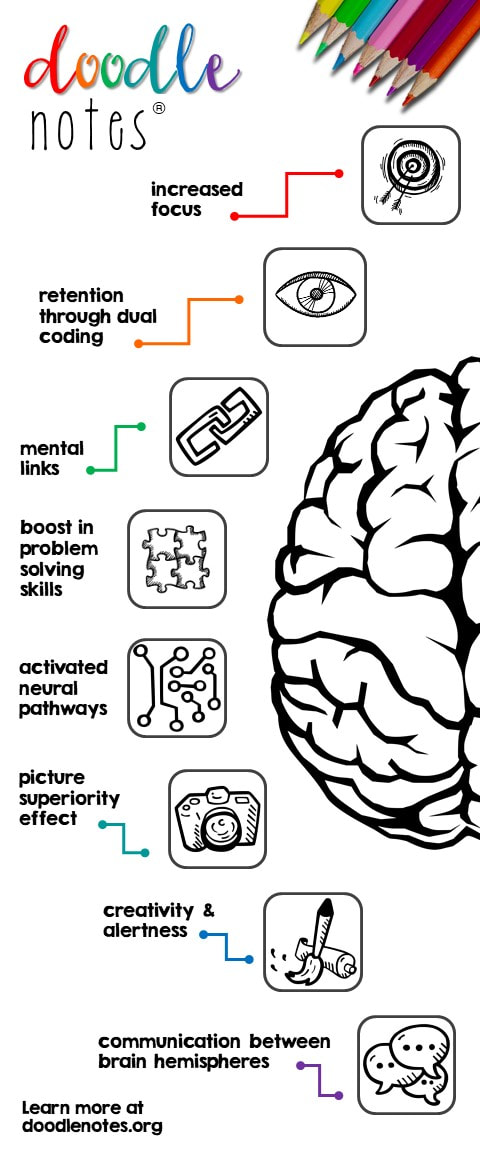
Why It Works:
 First Steps: (DAY ONE just means the first day using this strategy, which may or may not be the first day of the school year.) BEFORE CLASS DAY 1: Download the FREE Doodle Note Handbook. You can reference this later if you need some tips for implementing visual note taking in your classroom, or if you have time, you can read it now. It will come right to your inbox, and you can print it out or just save it for later on your computer. We will also send a few follow up emails with more resources and tips as you get started. We are here to support you as you dive into doodle notes with your own students! CLASS DAY ONE: Grab the FREE “Engage Your Brain” doodle note set. This is the perfect introduction to this strategy. All you have to do is print it out and distribute it to your students. It is essentially a doodle note about doodle notes, so it will do two things at once. It will teach your students how to take visual notes while it also shows them why we are going to be doing this as much as possible in class. 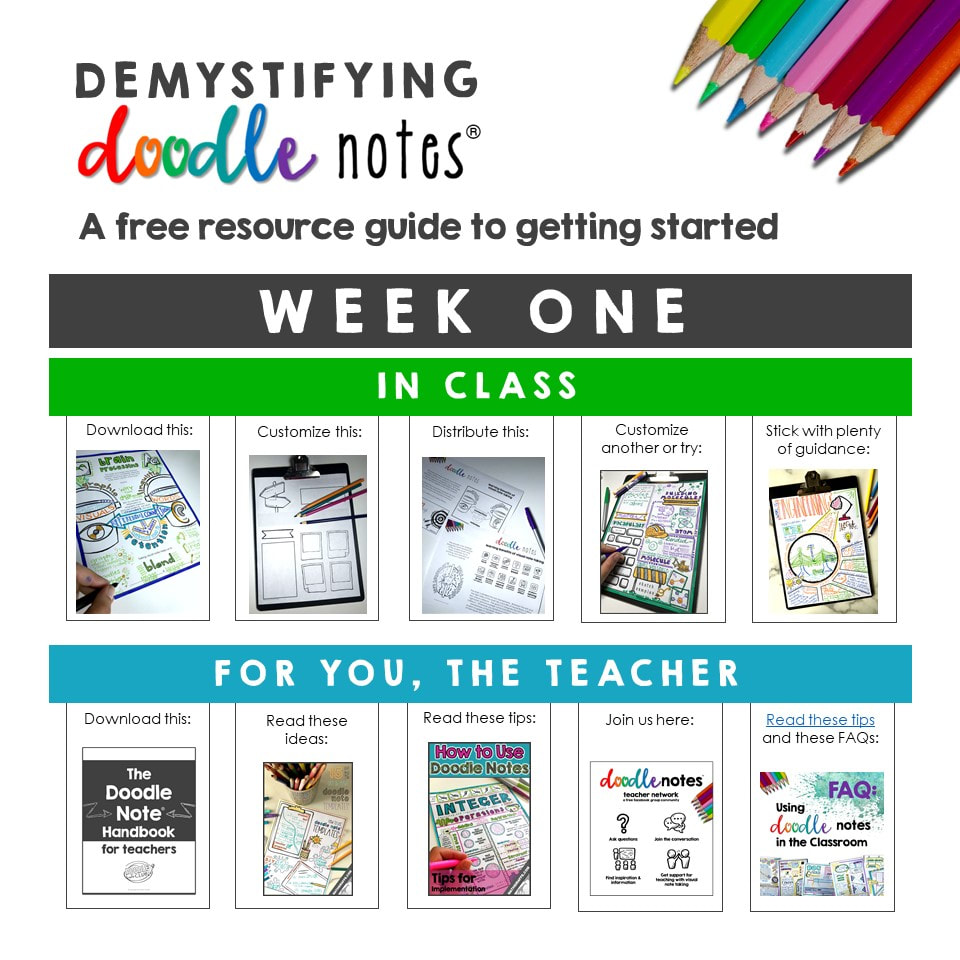 Click the image for a downloadable PDF version of this guide with clickable links. CLASS DAY TWO: Teach your first content-based doodle note lesson. Your first option for doing this is to either create or purchase a doodle note that is already customized to your lesson standard for today. If you’d like to browse pre-made doodle note pages, we’ve collected links to those over on the “Shop” page at doodlenotes.org for you. But if you’d rather create your own, we have templates available for you! Here is a starter pack of free templates, and here is a set of tips for using doodle note templates in your own classroom. CLASS DAY THREE: Now that students have gotten their feet wet with this strategy, it’s time to share the details with the shareholders in their education! Parents and administrators often will start to ask questions when they see that you’re not only letting kids doodle and color in class, but you’re actually encouraging it! We’ve got you covered there too. Download our free handout to send home. The file also includes a presentation that covers the benefits and shares a little information about visual note taking. You can show it to students, save it for parent night, or pass it on to your principal or co-teachers. In class today, use another prepared, guided doodle note lesson so your students can get used to this method slowly with plenty of teacher input/ guidance already on the page. We recommend that the first few weeks, you ease them into this strategy by offering pre-made guided visual note sheets or a template that organizes the visual note process for them, rather than expect them to be able to structure their own notes from scratch in a visual format yet. CLASS DAY FOUR: Now that you have tried implementing doodle notes as a teacher, you probably have some questions. Take your curiosity (and maybe your frustrations if you feel like a few things didn’t go according to plan) over to our teacher help pages: (FAQ here, and "In the Classroom" page here). Also, if you have not joined yet, it’s a great time for you to come get some support in our free Facebook group. We share some ideas, answer questions, and offer a place to chat with other teachers using the doodle note method there. Today in class, try either a new template from that free starter set, or another prepared, guided doodle note lesson. Don’t worry; as you and your students get the hang of this, you can eventually cut down on the prep work and allow them to have a bit more freedom. In fact, once your students have done a few weeks of guided doodle notes, you can even take away all the teacher input (less prep work!) and just hand them a blank doodle note template. Increase the student input as you go, and decrease the teacher-prepared structure. They will get better and better at creating their own visual notes once they have some practice. Speaking of that, we have some support and tools for you to use once they get to that point as well! … Next Steps Click the image to get a PDF version with clickable links. This guide breaks it down to help you focus only on what you and your students are ready for at any given time as you build those basic visual note-taking skills. 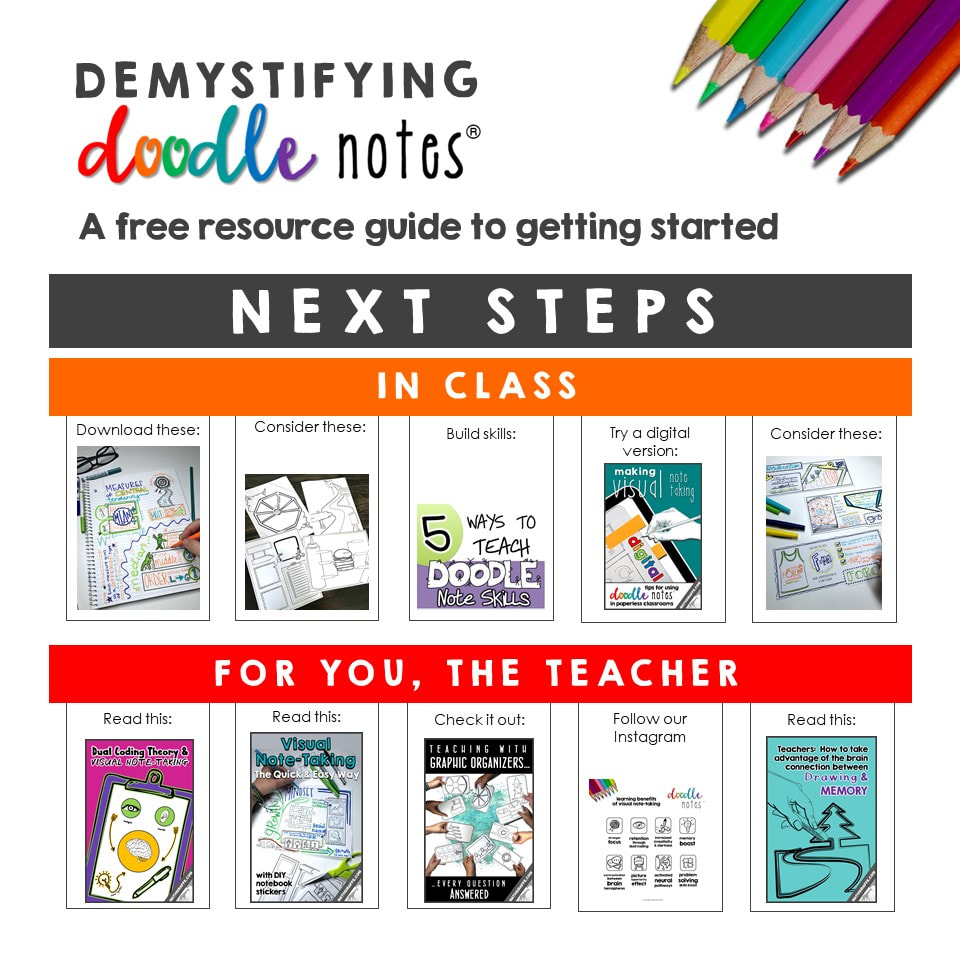 Once you’ve gotten comfortable teaching with doodle notes using the “Week One” resources, the links we have included in the “Next Steps” section will be just what you need next.
This way, you won’t get overwhelmed. Take it one phase at a time. The tools and support that are linked in this document will lead you from the very first days of teaching with doodle notes all the way to expert level. The resources to support you along the way are organized here for you. Enjoy the journey, and have fun getting creative! Ready to get started? Click here to download the full PDF version of this guide with links to all the included files.
7 Comments
|
Archives
December 2023
 Click to set custom HTML
|
 RSS Feed